How Does Increasing the Pressure Affect the Reaction Rate Answers
The apparatus you would need for this experiment are. This problem has been solved.

Chemical Equilibrium Chemistry Classroom Teaching Chemistry Chemistry Help
Ill use an acid-metal reaction for simplicity.
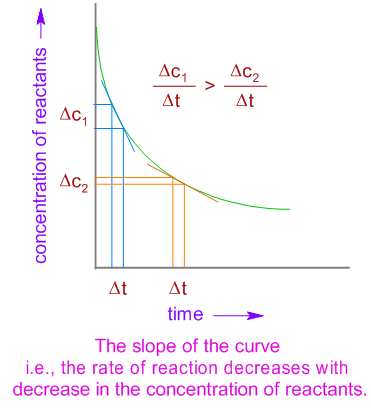
. Pressure increase on rate of reaction. The rate of the reaction can be increased by increasing the pressure of reacting gases. This is the best answer based on feedback and ratings.
In the manufacture of ammonia by the Haber Process the rate of reaction between the hydrogen and the nitrogen is increased by the use of very high pressures. Changing the pressure on a reaction that involves only solids or liquids has no effect on the rate. In a reaction involving reactants in the gas state how does increasing the partial pressures of the gases affect the reaction rate.
When you increase the pressure the molecules have less space in which they can move. But for reactions involves different phases such as both solid and liquid what will the. When you increase the pressure the molecules have less space in which they can move.
When you decrease the pressure molecules dont hit each other as often and the rate of reaction decreases. The rate of reaction increases. That greater density of molecules increases the number of collisions.
Explaining the effect of temperature on the rate of reaction using collision theory. See full answer below. In fact the main.
Some magnesium ribbons Dilute hydrochloric acid HCl Gas syringe optional. Ii How is the rate of the reaction affected on increasing the concentration of B by two times. When you increase the pressure the molecules have less space in which they can move.
175 Temperature and Reaction Rate. A measure of the number of moles of reactant used up during a unit of time. First do an experiment demonstrating the effect of surface area to the rate of reaction.
Therefore a greater proportion of molecules will have the minimum energy necessary for an effective collision Figure. An increase in temperature will raise the average kinetic energy of the reactant molecules. Surface area is one of the factors that affect the rate of reaction.
According to the collision theory for most of the reactions increasing the concentration of the reactants is known to increase the rate of the reaction. A reaction is first order with respect to the reactant A and second order with respect to the reactant B in a reaction A B product. An increase in temperature typically increases the rate of reaction.
The series of steps by which reacting particles rearrange themselves to form the products of a chemical reaction. Reaction rate can also be measured in terms of the number of moles of a product formed during a unit of time. Changing the pressure on a reaction which involves only solids or liquids has no effect on the rate.
I Write the differential rate equation. Of course many of these factors are active at all times and can have competing influences on the overall rate of a given reaction. How does pressure affect the rate of reaction.
Increasing the pressure on a reaction involving reacting gases increases the rate of reaction. There will be more collisions and so the reaction rate is increased. The reason for that is simple.
When you decrease the pressure molecules dont hit each other as often and the rate of reaction decreases. How does increasing pressure affect reaction rate. The higher the pressure of reactants the faster the rate of a reaction will be.
If the pressure of gaseous reactants is increased there are more reactant particles for a given volume. Pressure affects the rate of reaction especially when you look at gases. How does temperature affect activation energy of a reaction.
When more reactant molecules are available more collisions take place increasing the overall rate. There is a greater chance of the particles colliding. A An increase in temperature will cause the kinetic energy of the reacting particles to increase.
For reactions involving gases an increase in pressure is no different from increasing the concentration of reactant particles thus increasing the rate of reaction. Pressure is also related to concentration and volume. If you increase the pressure of a gas you squeeze it into a smaller volume.
View the full answer. The effect of temperature on rate of reaction is just one of the things that can affect how a reaction proceeds that is how quickly whatever reactants are present become transformed into products. An increase in temperature causes a rise in the energy levels of the molecules involved in the reaction so the rate of the reaction increases.
I hope help. This can be explained using the collision theory as below. When you increase the pressure the molecules have less space in which they can move.
The minimum energy needed for a reaction to proceed known as the activation energy stays the same with increasing temperature. If the pressure increase the number of intermolecular collisions increase and so the reaction rate. Increasing the pressure on a reaction involving reacting gases increases the rate of reaction.
When you decrease the pressure molecules dont hit each other as often and the rate of reaction decreases. That greater density of molecules increases the number of collisions. If the concentration or pressure is increased.
That greater density of molecules increases the number of collisions. That greater density of molecules increases the number of collisions. Pressure is also related to concentration and volume.
Rate law of a reaction between reactants A and B can be given. This is valid for gases. Show activity on this post.
When the temperature of a reaction increases the rate of reaction increases. The reactant particles become more crowded.

Effect Of Pressure Chemistry For Non Majors

Question Video Reaction Yields That Increase With Pressure Nagwa
Factors Affecting Rate Of Chemical Reactions Adichemistry


Comments
Post a Comment